Changi Logistics
Mexico City Market: The Heavy Industrial & Nearshoring Paradigm
The global trade landscape is undergoing a massive shift towards nearshoring, and Mexico has emerged as the central point of this evolution. Within this context, the Valley of Mexico (including Mexico City and its adjacent industrial corridors in Estado de México, Hidalgo, and Querétaro) serves as the primary consumption and production zone. From automotive components and high-precision machinery to heavy energy generation turbines, the demand for import infrastructure has skyrocketed.
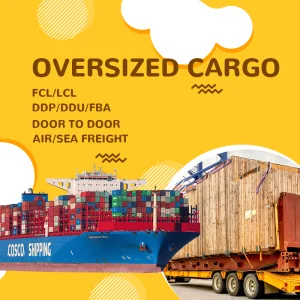
Oversized & Out-of-Gauge (OOG) shipping represents the high-stakes frontier of this supply chain. Navigating high altitudes, strict SCT regulations, and specialized transshipment is not merely about transportation; it is an engineering discipline.
Unique Geopolitical and Geological Challenges of Central Mexico
Logistics inside Mexico City is uniquely complex. Situated at an altitude of over 2,240 meters above sea level and ringed by high mountain ranges, incoming routes from major maritime ports such as Manzanillo (Pacific Coast) and Veracruz (Gulf Coast) present extreme challenges. Narrow mountain roads, steep inclines, and low overhead clearances require exhaustive prep work. Standard containers cannot accommodate heavy, high-dimensional components like wind turbine parts, heavy stamping presses, and petrochemical reactors. These projects demand specialized shipping options like Flat Racks, Open Tops, and heavy-duty multi-axle modular trailers.